"Matter in Our Surroundings" is the first chapter of the Class 9 Science NCERT textbook. This chapter introduces students to the concept of matter, its physical nature, states, and various interconversions. It lays the foundation for understanding higher-level concepts in Chemistry and Physics.
This article provides a complete overview of the chapter, including detailed explanations, NCERT-based notes, important questions, and key concepts. It is designed to help students grasp the subject effectively and prepare for school exams.
Matter is anything that occupies space and has mass. Everything around us, including air, water, books, and even our body, is made of matter. Matter exists in various forms and compositions.
Traditionally, matter is classified into three physical states:
The states of matter are interconvertible. They can change from one form to another by changing temperature or pressure.
Evaporation is the surface phenomenon where a liquid changes into vapor without reaching its boiling point.
Q1: Define matter.
A: Anything that has mass and occupies space is called matter.
Q2: Name the five states of matter.
A: Solid, Liquid, Gas, Plasma, Bose-Einstein Condensate
Q3: Why do solids have a definite shape?
A: Because the particles are tightly packed and cannot move freely.
Q4: What is the boiling point of water?
A: 100°C (at standard atmospheric pressure)
Q1: Differentiate between evaporation and boiling.
Ans:
Q2: Explain why water kept in an earthen pot becomes cool.
Ans: Due to evaporation of water through the porous surface of the pot, it absorbs heat and cools the remaining water.
Q3: Why do we feel cool when we perspire?
Ans: Sweat evaporates using heat from our body, producing a cooling effect.
Q4: Why do gases have neither a fixed shape nor a fixed volume?
Ans: The particles in gases are far apart and move freely in all directions.
Q1: What is latent heat of vaporization?
A: It is the heat required to convert 1 kg of a liquid into vapor at its boiling point without a temperature change.
Q2: What is condensation?
A: The process of a gas turning into a liquid.
Q3: Name two substances that sublime.
A: Camphor and dry ice.
Q4: Why does increasing temperature increase the rate of evaporation?
A: Because it increases the kinetic energy of particles.
"Matter in Our Surroundings" is a crucial foundational chapter in Class 9 Science. Understanding this chapter thoroughly helps in building concepts that are vital for higher studies in Chemistry and Physics. By revising key terms, practicing NCERT questions, and understanding real-life applications, students can master this chapter and perform well in exams.
Stay consistent with your revision, and practice questions regularly to strengthen your understanding of the chapter.

 Like| 1

 Comment





 1345 Enrollment
 Validity 11 month,26 days


Class 9th is not as tough as other high school classes but plays an important role in every student's career as it is a foundational stone for higher
544 followers

Nazism and the Rise of Hitler The chapter "Nazism and the Rise of Hitler" is an essential topic in Class 9 History and covers one of the darkest chap
1253 followers

Basic arithmetic includes addition, subtraction, multiplication, and division. This is elementary school mathematics, so it is very essential to maste

Class 10th Mathematics by AK S
101 followers

Is Matter Around Us Pure The chapter "Is Matter Around Us Pure" is the second chapter in the CBSE Class 9 Science curriculum. It follows "Matter in O
1253 followers

Why Do We Fall Ill In CBSE Class 9 Science, Chapter 13 titled "Why Do We Fall Ill" deals with the basic concepts of health and disease. It focuses on
1253 followers
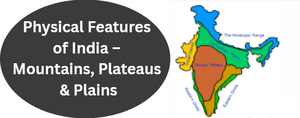
Physical Features of India The chapter "Physical Features of India" in Class 9 Geography is an important part of understanding the natural landscape
1253 followers

India's day of Independence Independence Day of India refers to the national holiday celebrated annually on August 15th. It marks the day when Ind
1253 followers
Choosing a career can be a tough job in itself. With so many lucrative career opportunities and amazingly flourishing fields, confusion is bound to ov

17 followers


 Copy Link