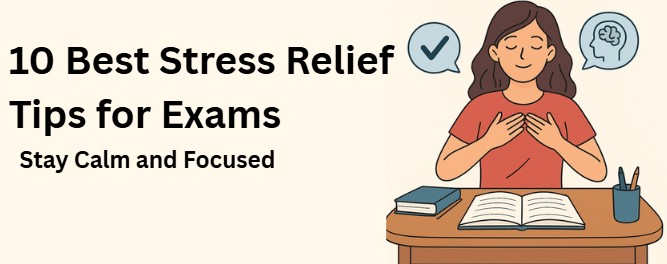
Exams often bring a mix of anticipation, nervousness, and pressure. While a little bit of stress can motivate you to study harder, too much of it can affect your performance, focus, and confidence. Students frequently struggle with anxiety, sleepless nights, and distractions during exam season. The good news is that exam stress is manageable. By following the right stress relief strategies, you can stay calm, concentrate better, and walk into the exam hall with confidence.
In this article, we'll explore 10 best stress relief tips for exams that will help you balance preparation with relaxation, improve your mental health, and maximize performance.
One of the biggest reasons students feel overwhelmed is lack of planning. Jumping into preparation without a clear roadmap creates confusion and stress.
A study plan ensures you cover all subjects systematically without last-minute panic.
Deep breathing and mindfulness are powerful tools to calm exam anxiety. Whenever you feel stressed, take a few minutes to practice:
This simple practice reduces heart rate, lowers stress hormones, and helps you regain focus.
Exercise isn't just for physical fitness—it's one of the best natural stress busters. Even 20–30 minutes of light activity like walking, yoga, stretching, or cycling can:
Try adding short movement breaks between study sessions to keep both mind and body fresh.
During exams, many students rely on junk food, caffeine, or energy drinks. While these might give a quick boost, they often lead to crashes, irritability, and reduced focus.
Instead:
Good nutrition fuels both body and brain, keeping stress in check.
Pulling all-nighters may seem productive, but lack of sleep harms concentration, memory retention, and problem-solving skills. Sleep is crucial for:
Aim for 7–8 hours of restful sleep daily, especially during exam week.
Relaxation doesn't always mean wasting time. It can be an essential part of exam preparation. Techniques such as:
These activities refresh your mind, reduce stress hormones, and improve productivity.
Disorganized notes can make revision stressful. To avoid panic:
A well-organized approach saves time and gives you a sense of control, reducing exam stress.
It's common to feel stressed when comparing your preparation with friends or classmates. But every student has different strengths and learning styles. Constant comparison only adds pressure.
Instead:
Studying for long hours without breaks drains your mental energy. Short, regular breaks are essential for refreshing the brain.
Try the Pomodoro Technique:
Breaks improve productivity, reduce stress, and keep motivation levels high.
A calm, positive attitude is key to handling exam pressure. Remind yourself:
Use affirmations like “I am focused and confident” or “I can handle this exam calmly.” Positivity reduces anxiety and enhances performance.
Exam stress is natural, but it doesn't have to control you. By following these 10 best stress relief tips for exams, you can stay calm, focused, and confident. A well-planned study routine, healthy lifestyle, positive mindset, and relaxation techniques all contribute to better performance and peace of mind.
Remember, exams are just one part of life. Stay balanced, believe in yourself, and give your best effort.
Final Note: If you want to score high and keep exam anxiety under control, start applying these stress relief strategies today. With calmness and consistency, success will follow.

 Like| 2

 Comment





 919 Enrollment
 Validity 11 month,26 days
Picky Eaters: Picky eaters are children who have strong preferences or aversions towards certain foods. They may exhibit selective eating habits,

155 followers
What is JEE? JEE (Joint Entrance Examination) is a national level entrance exam conducted by the NTA(National Testing Agency) to offer admission to B

6 followers

With the growing demand and trend in online education, many schools and colleges have started adopting the online approach. We can say that online edu

1254 followers
Examination is something we often look upon with fear. This is because either we lack confidence,are lazy for preparation or simply believ

17 followers

The Central Board of Secondary Education (CBSE) conducts board examinations for class 10th, 11th and 12th. 10th boards are necessary as they give you

469 followers

5 Best tips to create study notes Creating effective study notes is an essential skill for students and professionals alike. Well-organized notes hel
1254 followers

Name of Post : Haryana Board Class 10th Result 2020 Result date : UPDATE SOON Post Information : Haryana Board of Secondary Education HSBE /

750 followers

Board exams are very important for every student. The CBSE conducts various examinations for various students who opt for different courses after the
469 followers


 Copy Link