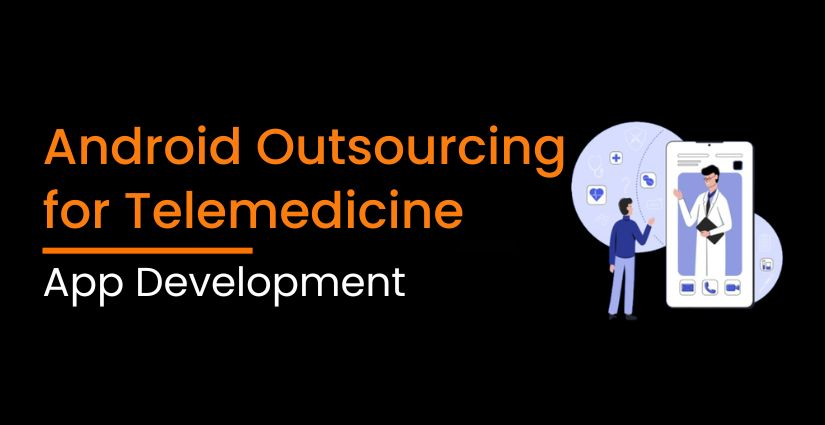
The healthcare industry has undergone a massive digital transformation in recent years, and telemedicine has emerged as one of the most impactful innovations. Patients can now consult doctors remotely, access prescriptions online, monitor chronic conditions, and receive medical advice without visiting a hospital. As demand for remote healthcare services grows, businesses and healthcare providers are increasingly investing in Telemedicine App Development to meet modern patient expectations.
However, building a secure, scalable, and compliant telemedicine application is a complex process. This is where Android App Development Outsourcing becomes a strategic solution. By outsourcing Android development to experienced teams, healthcare organizations can accelerate time-to-market, reduce costs, and ensure high-quality results.
In this comprehensive blog, we will explore why outsourcing Android development for telemedicine apps is beneficial, what features are essential, the development process, security considerations, challenges, and best practices.
Telemedicine apps have reshaped healthcare delivery by offering:
The COVID-19 pandemic accelerated the adoption of telehealth services worldwide, but even beyond the pandemic, telemedicine remains a preferred option due to convenience, accessibility, and cost efficiency.
Android dominates the global smartphone market, especially in emerging economies where telemedicine services are expanding rapidly. Therefore, developing a robust Android telemedicine app is crucial for healthcare providers aiming to reach a broad patient base.
Android offers several advantages for telemedicine solutions:
Android devices account for a significant percentage of global mobile usage, making them ideal for healthcare outreach.
Developers can customize applications extensively to meet specific healthcare requirements.
Android apps can be deployed across various devices, including smartphones, tablets, and wearable devices used for health monitoring.
Android development can be more cost-effective due to open-source tools and broad developer availability.
Because telemedicine apps require real-time communication, secure data exchange, and reliable performance, Android provides the flexibility and scalability needed for healthcare innovation.
Developing a telemedicine app in-house can be resource-intensive. It requires specialized skills in mobile development, healthcare compliance, cybersecurity, UI/UX design, cloud infrastructure, and video communication technologies.
Outsourcing offers multiple benefits:
Outsourcing connects healthcare organizations with experienced developers who understand:
Professional teams offering Custom android app development services bring cross-industry experience that enhances app performance and security.
Hiring and maintaining an in-house development team involves:
Outsourcing reduces overhead while maintaining quality. It allows organizations to allocate resources toward patient care and service expansion instead of development infrastructure.
Telemedicine is a competitive market. Launching quickly can provide a major advantage. Outsourcing teams follow streamlined processes and agile methodologies to accelerate development cycles.
When healthcare providers hire android app developers through outsourcing partners, they often benefit from ready-made frameworks and reusable modules that speed up development.
By outsourcing technical development, healthcare organizations can concentrate on:
Technical complexities are handled by specialized Android development teams.
To ensure success, telemedicine apps must include robust and user-friendly features.
Security is critical since medical data is highly sensitive.
High-quality video conferencing is the backbone of telemedicine. The app must provide:
Patients should be able to:
Automation improves efficiency and reduces administrative workload.
The app should integrate with EHR systems to:
Telemedicine apps often include:
Payment security must comply with financial regulations.
Integration with wearable devices allows:
This feature is especially valuable for chronic disease management.
Notifications keep users informed about:
Outsourcing partners typically follow a structured development lifecycle.
Clear requirements ensure efficient project execution.
Healthcare apps must prioritize simplicity and accessibility. Designers focus on:
User-friendly design increases adoption rates.
The backend must support:
Cloud platforms like AWS or Google Cloud are often used to handle large data volumes securely.
Using Kotlin or Java, developers build:
Agile development methodologies ensure iterative improvements.
Security measures include:
Thorough testing ensures:
After launch, ongoing support includes:
Long-term maintenance is essential for healthcare applications.
Telemedicine apps must adhere to strict healthcare regulations:
Ensures protection of patient health information.
Protects user data privacy.
Safeguards sensitive medical data during transmission and storage.
Outsourcing teams experienced in healthcare compliance reduce legal risks and ensure regulatory alignment.
Despite its advantages, telemedicine app development presents challenges:
Healthcare data is highly sensitive and a common target for cyberattacks.
Connecting with hospital systems and third-party APIs can be complex.
Video calls require strong backend infrastructure.
Android runs on multiple devices and OS versions.
Different countries have varying healthcare laws.
Outsourcing to experienced developers helps navigate these challenges efficiently.
Several factors influence development costs:
While outsourcing reduces overhead, quality should remain the top priority.
Choosing the right outsourcing partner offers:
Professional teams providing Custom android app development services can tailor telemedicine apps to specific healthcare needs.
The telemedicine landscape continues to evolve. Future innovations include:
AI-driven diagnostics and symptom analysis.
Enhanced security and transparency.
Seamless wearable device connectivity.
AR-assisted remote medical guidance.
Improved video consultation quality.
Healthcare providers who hire android app developers with expertise in emerging technologies will gain competitive advantages.
Outsourcing is ideal when:
For many healthcare startups and institutions, Android App Development Outsourcing provides flexibility and efficiency without compromising quality.
Telemedicine is redefining healthcare delivery by bridging the gap between patients and providers through digital innovation. Android’s vast user base makes it a powerful platform for telehealth solutions, but building a secure and compliant telemedicine app requires specialized expertise.
Outsourcing Android development offers healthcare organizations access to skilled professionals, faster time-to-market, cost efficiency, and technical excellence. By leveraging Telemedicine App Development strategies and collaborating with experienced partners offering Custom android app development services, healthcare providers can deliver reliable and secure mobile solutions.
Organizations that strategically hire android app developers through outsourcing models can focus on improving patient outcomes while leaving technical complexities to experts.

 Like
Like

 Comment





 915 Enrollment
 Validity Unlimited
  1134 Enrollment
Validity Unlimited
1134 Enrollment
Validity Unlimited 
 0 Enrollment
Validity Unlimited
0 Enrollment
Validity Unlimited 
Here is a list of moments to avoid during the investment process if you want to hire Android developers for the job. Don't hire Android develop

67 followers

With this new networked world, apps need to work great on whatever operating system or device they just so happen to be running on. Phone, tablet, or

More companies are turning to customize their software for a variety of reasons as technology and customers become more complex. Custom software devel

In the fast-paced digital world, mobile applications have become an integral part of our daily lives. From social media to e-commerce and productivity

1253 followers
Building a successful Android application goes far beyond writing clean code and designing intuitive interfaces. This means that you need to assess wh

1 followers

Mobile apps have transformed the way businesses operate, providing a convenient and efficient way for businesses to connect with their customers, stre

Smartphones have changed the way we access services and information by putting them in our hands forever. They have been integrated into almost eve
67 followers

Best Mobile Development Frameworks in 2025 In today's digital age, mobile application development has become a cornerstone for businesses and deve
1253 followers


 Copy Link