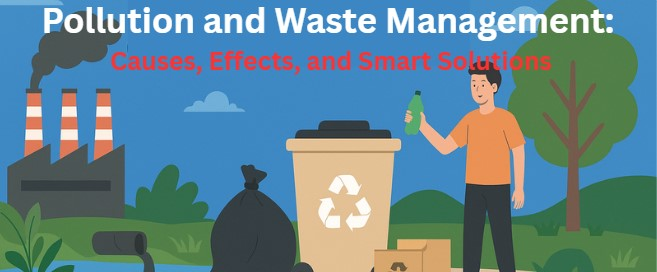
Pollution and waste are two of the biggest environmental challenges facing the world today. Every day, tons of garbage, plastics, and harmful gases are released into the air, water, and soil, harming both humans and nature.
Pollution and waste management are closely connected — when waste isn't managed properly, it leads to pollution, which affects health, biodiversity, and climate.
In this article, we'll explore what pollution is, how waste contributes to it, and what smart, sustainable solutions can help us create a cleaner and healthier planet.
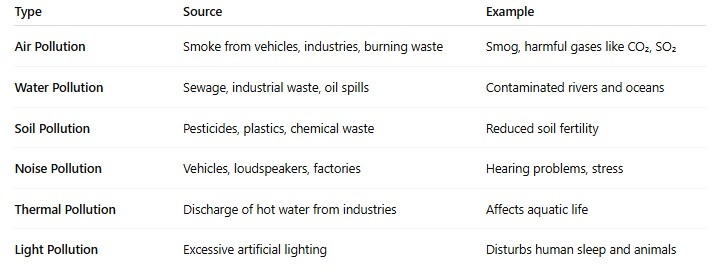
Pollution is the introduction of harmful substances into the environment that cause damage to living organisms and ecosystems. These pollutants can be in solid, liquid, or gas form and come from human activities such as industrial work, transportation, or improper waste disposal.
Waste management refers to how waste materials are collected, transported, treated, and disposed of safely. Its goal is to reduce the harmful impact of waste on health and the environment.
Industries release large quantities of toxic gases, chemicals, and solid waste into the environment. Factories near rivers often discharge untreated water into them, polluting aquatic life.
More people means more waste. Rapid urban growth leads to overfilled landfills, sewage issues, and unplanned waste disposal.
Single-use plastics like bottles, bags, and packaging materials don't decompose. They pollute soil and oceans and harm animals.
Cars, trucks, and bikes emit harmful gases like carbon monoxide and nitrogen oxides, which contribute to air pollution and global warming.
Overuse of fertilizers and pesticides contaminates soil and water, leading to food and groundwater pollution.
Discarded phones, computers, and batteries contain heavy metals like lead and mercury that pollute the environment if not recycled properly.
To fight pollution effectively, countries must adopt sustainable waste management strategies that combine technology, awareness, and community participation.
Separating waste at the point of generation into categories such as biodegradable (food, paper) and non-biodegradable (plastic, glass) makes recycling and disposal more efficient.
Recycling helps convert waste materials into new products.
Examples:
Organic waste like food scraps and leaves can be composted to produce natural fertilizer, reducing the need for chemical ones and improving soil quality.
Modern plants convert non-recyclable waste into energy through incineration or biogas production, reducing landfill waste.
E-waste should be handed over to authorized recyclers who can safely extract metals and prevent toxic pollution.
Using electric vehicles (EVs), public transport, and bicycles helps reduce air pollution caused by fuel emissions.
Education plays a key role. Schools, NGOs, and governments should promote awareness about the importance of waste segregation, recycling, and pollution control.
Strict environmental laws and policies like the Swachh Bharat Mission and Plastic Waste Management Rules in India encourage cleaner cities and responsible waste disposal.
Smart waste bins, AI-based recycling systems, and IoT-based pollution monitoring can track and reduce pollution more effectively.
Each one of us can help reduce pollution and manage waste better. Here's how students and citizens can contribute:
Small daily actions can lead to big environmental improvements.
Sweden recycles or converts over 99% of its waste into energy, making it one of the cleanest countries in the world.
Japan follows strict waste segregation rules where citizens separate waste into multiple categories. Their recycling rate exceeds 80%.
India has banned single-use plastics in several states and encourages recycling through the Swachh Bharat Abhiyan.
The Netherlands focuses on reusing materials and minimizing waste generation through smart city design and green technology.
The future lies in sustainability and innovation. Scientists and environmentalists are developing eco-friendly technologies like:
By combining innovation, education, and responsibility, we can build a future where pollution is minimal and resources are used wisely.
Pollution and waste management are global challenges that demand urgent attention. Every piece of plastic thrown away or every chemical released into rivers has a long-term impact on the planet.
Through recycling, reducing waste, using renewable energy, and adopting sustainable lifestyles, we can make the Earth cleaner and healthier.
Remember: The solution to pollution starts with you. Every small step — like saving water, reducing plastic, or segregating waste — contributes to a better future for everyone.
Air, water, soil, noise, and light pollution are the major types caused by human activities.
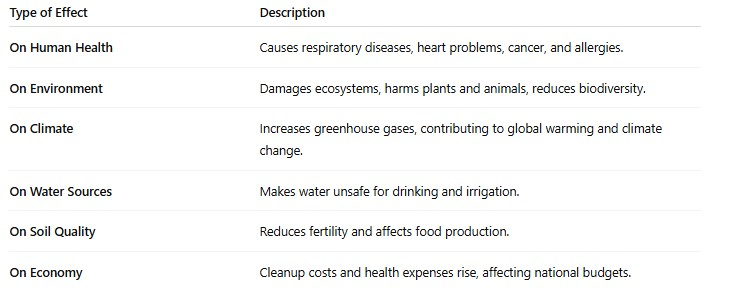
Improper disposal of waste leads to contamination of air, water, and soil, causing pollution and health hazards.
Recycling, composting, reusing, and proper disposal of hazardous materials are the best ways to manage waste sustainably.
It means managing waste in ways that protect the environment, save resources, and reduce pollution for future generations.
Students can avoid single-use plastics, participate in cleanliness drives, and spread awareness about environmental protection.
Governments create and enforce laws, build waste treatment plants, and run awareness programs to promote responsible disposal.

 Like| 6

 Comment





The SSC CGL 2020 strategy for the quantitative aptitude section should be detailed enough because the clarity of concept is a must for this sect

SSC Preparation Strategies & S
1551 followers

Today, students aspiring to clear the UPSC form can focus on proposed changes for the NPR form, a 24/7 Mumbai city and the declining birth rates in Ch
1012 followers

SSC CGL 2020 Tier-1 exam will be conducted online from 2nd March to 11th March and since it is right around the corner, now is the time to start your
SSC Preparation Strategies & S
1551 followers

The Civil service examination is one of the most competitive and popular exams in the country. Union Public Service Commission for about 24 top govern

3 followers
तमिलनाडु राज्य के पुरातत्त्व विभाग द्वारा तमिलनाडु के कीलादी संगमकालीन नगरीय बस्ती में छठे चरण की खुदाई की जा रही है और उसी दौरान वहां एक बच्चे

30 followers

Question 1. A and B together can finish a work in 30 days. They worked for it for 20 days and then B left the work. The remaining work was done by A a
SSC Preparation Strategies & S
1551 followers

An intelligent man once said that “take care of children you already have, don’t increase the population”. If everyone will start following this princ
1012 followers

An international organization can be defined, by the international law commission as an- 'Organization established by treaty or other instrument gover

13 followers


 Copy Link