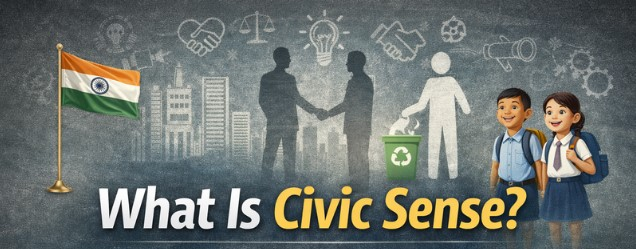
Civic sense is one of the most essential qualities that shapes how individuals behave in society. It reflects respect for public spaces, awareness of social responsibilities, and concern for the well-being of others. Understanding what is civic sense helps citizens contribute positively to their communities and play an active role in building a disciplined, responsible, and harmonious society.
In today's fast-growing world, where cities are expanding and populations are increasing, civic sense has become more important than ever. It influences daily interactions, public behavior, and the overall quality of life in a nation.
Civic sense refers to the sense of responsibility and awareness that individuals have toward society, public property, and fellow citizens. It involves behaving in a way that respects laws, social norms, and the rights of others.
In simple terms, civic sense means:
Civic sense is not enforced only by laws. It is guided by values, ethics, and social awareness developed through education and upbringing.
The word “civic” relates to citizens and society, while “sense” means awareness or understanding. Together, civic sense means understanding how one’s actions affect others in society.
Examples include:
These small actions collectively create a disciplined and respectful social environment.
Civic sense plays a vital role in maintaining social order and harmony. When citizens behave responsibly, society functions smoothly without excessive dependence on strict enforcement.
Civic sense helps reduce chaos in public spaces. Simple habits like obeying traffic signals and following queues prevent accidents and conflicts.
Public property belongs to everyone. Civic sense discourages vandalism, misuse of resources, and damage to government infrastructure.
Clean surroundings, disciplined behavior, and mutual respect create a safer and healthier living environment.
When people respect each other's rights and responsibilities, social trust and cooperation increase.
Civic sense is closely linked with civic responsibility. Responsibility involves fulfilling duties toward society, while civic sense guides how those duties are performed.
Civic responsibilities include:
A society where citizens are responsible and aware experiences faster development and fewer social conflicts.
Civic sense is reflected in everyday actions. Some common examples include:
Though simple, these actions have a powerful collective impact on society.
Civic sense is a foundation of nation building. A nation's progress depends not only on government policies but also on the behavior of its citizens.
Civic sense creates awareness about rights and duties, making citizens active participants in national development.
When citizens follow rules voluntarily, governance becomes more efficient and transparent.
Disciplined citizens reduce the burden on law enforcement agencies and public administration.
A country known for disciplined and responsible citizens earns global respect and trust.
Education plays a major role in developing civic sense. Schools and colleges are the first places where students learn social behavior beyond family values.
Educational institutions promote civic sense through:
Early exposure helps students develop lifelong habits of responsible citizenship.
Students are future citizens and leaders. Developing civic sense at a young age shapes their character and outlook toward society.
Students with strong civic sense:
Civic sense also improves discipline, empathy, and ethical thinking among students.
Civic sense is equally important in both urban and rural settings, though challenges differ.
In urban areas:
In rural areas:
Balanced civic sense across regions supports inclusive national development.
Despite its importance, lack of civic sense is a common issue in many societies.
Addressing these issues requires collective effort and awareness.
Improving civic sense is a shared responsibility of individuals, families, educational institutions, and governments.
Civic education should be part of school curricula and public campaigns.
Parents play a crucial role by teaching discipline and respect through daily behavior.
Strict enforcement of laws combined with awareness programs encourages responsible behavior.
Media can influence behavior positively by promoting civic values and responsible conduct.
In a democratic system, civic sense ensures active and responsible participation of citizens. Voting wisely, respecting differing opinions, and engaging peacefully in discussions are signs of a mature democracy.
Civic sense strengthens democracy by:
Environmental protection is a key aspect of civic sense. Responsible use of natural resources and eco-friendly habits contribute to sustainable development.
Examples include:
Environmental civic sense ensures a healthier future for coming generations.
In the digital era, civic sense also extends to online behavior. Responsible use of social media, respectful communication, and avoiding misinformation are modern forms of civic responsibility.
Digital civic sense includes:
Understanding what is civic sense is essential for creating a disciplined, respectful, and progressive society. Civic sense is not limited to following laws; it reflects awareness, responsibility, and respect toward others and public resources. From daily habits to national development, civic sense plays a crucial role in shaping social harmony and democratic values.
By promoting civic sense through education, family values, and social awareness, societies can move toward sustainable growth and peaceful coexistence. A nation with strong civic sense among its citizens stands on the foundation of responsibility, cooperation, and mutual respect.

 Like| 6

 Comment | 1







 0 Enrollment
 Validity 3 month,1 day
Permafrost is any ground that remains completely frozen—32°F (0°C) or colder—for at least two years straight. These permanently frozen grounds are mos

302 followers

The United Nations Climate Change Conference organized under the Chilean government presidency. The most important commandment of any conference until
1012 followers
भारत के कड़े विरोध के बावजूद इस नए नक्शे में नेपाल ने तीन भारतीय इलाकों लिपुलेख, कालापानी और लिंपियाधुरा को अपने क्षेत्र के रूप में दर्शाया है भारत

13 followers
Delhi, the capital of India, is often regarded as the epicentre of UPSC Civil Services Examination (CSE) preparation. The Union Public Service Commiss

The wide world of internet brings to you a plethora of content. You can read articles, news, and access different information based on your interest.

31 followers
Your UPSC 2020 preparation strategy should involve the plan for prelims as well as mains. The following topics are included in both prelims and mains.
1012 followers

US-Iran conflict: Trump backs away after Iran’s attack US President Donald Trump has not talked about an escalation in conflict after Irani miss
1012 followers

Name of Post : UKPSC Personal Assistant Result / Marks 2020 Result date : 08 July 2020 Post Information : Uttrakhand Subordinate Selection C

750 followers


 Copy Link